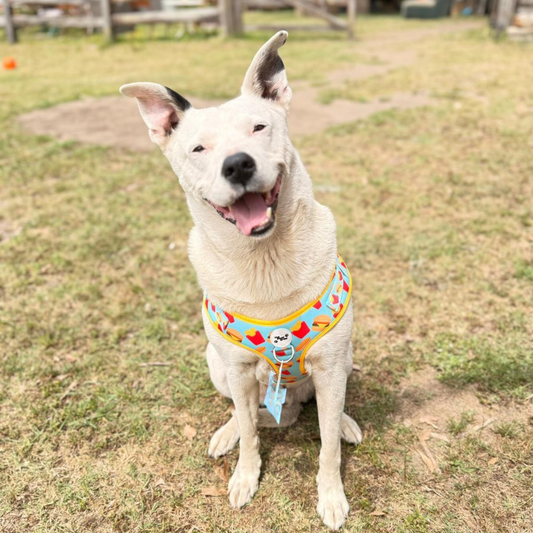
How To Find The Perfect Size Harness For Your Dog
Share
A harness that fits properly isn't just about looks. It directly impacts your dogs comfort and safety.
A harness that is too tight can:
- Rub and cause irritation
- Restrict movement
- Make your dog hate walks.
A harness that is too loose can:
- Slip off (escape artist mode activated)
- Cause chafing
- Reduce control on walks.
The goal: snug, secure and comfy!
Step 1: Measure Your Dog Correctly
Before you buy anything you need the right measurements. To do this, you'll need a soft measuring tape.
Measure these two key areas:
- Chest (most important): Wrap the tape around the widest of your dogs chest (just behind the front legs).
- Neck: Measure around the base of the neck (where a collar would usually sit).
Pro tip: If you dog is fluffy, don't press too tightly. Measure over the fur naturally.
Step 2: Check The Size Chart (Every Brand is Different!)
This is where a lot of people go wrong.
Not all harnesses are created equal. A size small in one brand might be a medium in another.
Always:
- Compare your dogs measurements to the brands size chart.
- Focus on chest measurement first (it's the most important for harnesses)
- If in between sizes → usually size up.
Step 3: Consider Adjustability
Some harnesses come with adjustable straps, which can give you more flexibility when it comes to fit.
Look for:
- Adjustable straps around the neck and chest.
- Multiple adjustable points
- Secure, sturdy buckles
This can help you:
- Fine-tune the fit for your dogs shape
- Allow room for growth (especially for puppies)
- Adjust for fluff, weight changes, or layering (like raincoats)
While adjustable harnesses offer more flexibility, simpler styles like step-in harnesses can still be a great option. Especially for ease of use and everyday comfort.
Step 4: Do the "Two-Finger Test"
Once the harness is on, you should be able to fit two fingers comfortably between the harness and your dog.
- Too tight → you can't fit your fingers
- Too loose → too much space or shifting
Step 5: Watch How Your Dog Moves
The final test = real-life movement.
Your dog should be able to:
- Walk naturally
- Run comfortably
- Sit and lie down without restriction
Red flags:
- Rubbing under the arms
- Harness twisting or shifting
- Your dog trying to wriggle out of it
Common Sizing Mistakes to Avoid
- Guessing your dogs size
- Choosing based on weight only
- Not re-measuring as your dog grows
- Ignoring breed/body shape differences
Bonus Tip: Different Harness Styles Fit Differently
Not all harnesses sit the same!
For example:
- Step in harnesses → Great for dogs who hate things going over their head
- Adjustable harnesses → Great for dogs who need extra flexibility.
Choose the style that suits your dog and their personality.
Final Thoughts
Finding the right harness size doesn't have to be complicated. It just takes a few extra minutes to measure properly.
And trust me.. you'll notice the difference.
Because at the end of the day, a comfy dog = better walks = happier humans.